


Veterinary chiropractic care can genuinely help dogs and cats move more comfortably, particularly when stiffness, compensatory movement, or post-injury changes are affecting how they feel day to day. It is a hands-on therapy that focuses on the spine and joints, using controlled, low-force adjustments to restore normal movement to areas where mobility has become restricted. Chiropractic is not a replacement for conventional veterinary diagnosis and treatment, but it works well alongside it, especially for patients dealing with chronic pain, recovering from orthopedic issues, or showing changes in gait or posture that standard exams have not fully explained.
South Shores Pet Clinic in San Pedro offers chiropractic care as part of a broader approach to pain management and patient comfort, using it alongside other tools to help pets stay active and feel better across different life stages. Our team evaluates each patient to determine whether chiropractic makes sense as part of their overall care plan. If your dog or cat has been stiff, hesitant on stairs, or just not moving the way they used to, give us a call, walk in, or reach out and we can talk through whether it is the right fit.
Veterinary Chiropractic at a Glance
- It is a specialized discipline: performed by practitioners with formal training and certification, not a substitute for medical diagnosis.
- It works best in a multimodal plan: alongside medication, rehabilitation, laser therapy, and weight management.
- Certain pets respond well: seniors, athletic dogs, post-surgical patients, and pets with chronic joint conditions.
- Some pets are not candidates: fractures, active infections, and certain neurological conditions rule it out, which is why an exam comes first.
What Is Veterinary Chiropractic Care?
Veterinary chiropractic is the assessment and manual adjustment of joints that have become restricted in their normal range of motion, with a focus on the spine and the major limb joints. The practitioner uses precise, low-force movements to restore that motion, which reduces nerve interference, lets muscles relax, and helps the pet move more naturally. Over the past two decades, chiropractic for companion animals has matured into a recognized component of integrative veterinary care. A few important distinctions:
- It is a specialized discipline, performed by a licensed veterinarian or chiropractor with additional certification from a recognized program, not the same as massage or “popping” a pet’s back.
- The evaluation comes before any adjustment, with the practitioner watching the pet move, assessing posture, and palpating to identify specific restricted joints, leaving normally moving areas alone.
- Adjustments are small and specific; done correctly, chiropractic for dogs and cats uses brief, targeted contacts that most pets tolerate well. There are no dramatic movements, like neck twisting or back cracking, like you may see in trending videos of human chiropractic care.
- It is not a one-and-done, since most patients see meaningful change over a course of several sessions, tapering once gains are stable.
Our chiropractic work is done by Dr. Kim Chromas, who was a human chiropractor for 34 years before deciding to transition to providing chiropractic care to dogs and horses (and soon, cats!). She completed hundreds of hours of intensive study for the certification to perform animal chiropractic care. The testimonials from patients she’s treated say it all- her work helps pets move with less pain and improves their quality of life.
What Signs Suggest Your Pet Needs an Evaluation?
Pets rarely show pain the way people do; they limp, compensate, slow down, and adapt, so many signs of restricted spinal or joint movement get attributed to “just getting older.” Patterns worth noticing:
- Stiffness after rest that loosens with activity, then returns
- Reluctance to use stairs, jump on or off furniture, or get into the car
- Holding the head low or carrying the tail differently than usual
- Uneven muscle development between sides or front and back
- Changes in gait like bunny-hopping, short-striding, or dragging a paw
- Sensitivity to being touched along the back or hips
- Difficulty grooming, especially cats who stop grooming certain areas
- Postural shifts like a roached back or sitting unevenly
- Changes in mood or activity tolerance without a clear medical explanation
Limping is the most obvious sign but far from the only one. The reality with conditions that cause pain in pets is that pain is missed surprisingly often, because pets adjust their behavior rather than show distress. A formal mobility assessment at a wellness visit catches subtle changes owners often miss.
What Conditions Does Chiropractic Care Help?
Chiropractic care most often comes up for pets whose primary problem creates secondary restrictions throughout the body, since addressing those restrictions improves comfort and slows the cascade of compensation.
Arthritis and Degenerative Joint Disease
Osteoarthritis is one of the most common reasons pets are referred for chiropractic, since as cartilage wears, pets shift weight to spare painful joints and the spine takes on strain it was not designed for. Restoring movement in those compensating spinal joints often improves overall comfort even when the primary arthritis cannot be reversed. Cats are especially underdiagnosed, since by some estimates more than 90 percent of cats over age 12 have radiographic evidence of arthritis, yet only a small fraction get treatment because cats hide pain so well, so subtle changes like grooming less or jumping less are often arthritis signs that chiropractic, alongside medication and home modifications, can help address.
Hip Dysplasia and Orthopedic Conditions
Hip dysplasia and other orthopedic conditions create predictable compensatory patterns, since a dog with painful hips shifts weight forward and one with a torn CCL twists the pelvis and lumbar spine, and over time those compensations become their own pain generators. Chiropractic addresses those secondary patterns, and used alongside surgery when indicated, pain medication, weight management, and rehabilitation, it helps the body move more efficiently and reduces cumulative strain. We coordinate chiropractic with our surgery services when post-op recovery makes it appropriate.
Spondylosis and Spinal Conditions
Spondylosis is the formation of bony spurs along the vertebrae, usually in response to chronic strain or instability, and it is common in middle-aged and senior dogs, often showing up on radiographs taken for an unrelated reason. While the spurs cannot be undone, the restricted joints they contribute to often respond to adjustment, which can slow the further compensation patterns that develop when pets brace against back pain.
How Does Chiropractic Differ From Massage?
Both massage and chiropractic are hands-on therapies with a role in patient comfort, but they address different layers of the musculoskeletal system:
- Massage works on soft tissue like muscles, tendons, and fascia, improving circulation, releasing tension, and reducing spasm, generally without targeting specific joint mechanics.
- Chiropractic works on joint mechanics and the nervous system’s relationship to movement, targeting specific restricted joints with precise contacts rather than broad pressure.
The two are complementary, and many pets benefit from both in the same plan, since tight muscles can pull joints out of alignment while restricted joints can cause protective muscle tension, so addressing both layers tends to work better than either alone.
What Happens at a Chiropractic Visit?
Every patient who comes for chiropractic care at South Shores must first have a visit with Dr. Weimer. At that time, diagnostics may be recommended, along with pain control, rehab, or other therapies that might help your pet’s condition. After that, a first chiropractic visit usually includes:
- History review, covering your pet’s diagnosis, what changes you have noticed, when they started, and what helps or worsens them.
- Static evaluation, looking at how your pet stands and distributes weight.
- Gait analysis, evaluating walking, trotting, and turning for asymmetries.
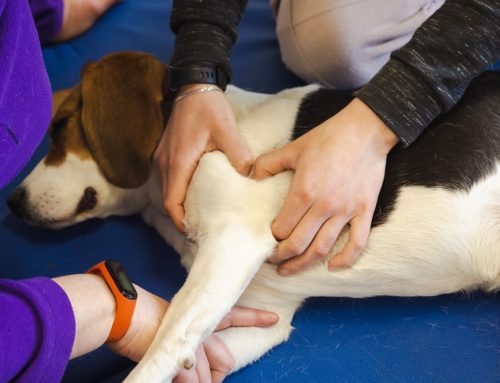
- Hands-on assessment, palpating the spine and limbs for restricted motion or muscle tension.
- Adjustment, using specific, low-force contacts at restricted joints, which most pets tolerate well.
- Recheck and plan, reassessing motion after adjustment and discussing how often to return.
Pet responses vary, with some looser and more comfortable within hours and others going through a brief 24-to-48-hour adjustment period before improving. The realistic timeline in chiropractic care for dogs is that meaningful change typically appears within one to three sessions, with ongoing frequency adjusted to each individual.
How Does Chiropractic Fit Into a Pain Plan?
Chiropractic rarely stands alone, and the strongest results come from a plan combining several tools that address different facets of the problem:
- Medications like NSAIDs, gabapentin, Solensia for feline arthritis, and Librela for canine arthritis as appropriate
- Laser therapy to reduce inflammation and improve tissue healing, which we offer as part of our pain management toolkit
- Joint supplements like glucosamine, chondroitin, and omega-3 fatty acids
- Weight management, since each pound of excess weight increases joint load disproportionately
- Home modifications like ramps, non-slip flooring, raised feeding stations, and orthopedic beds
- Rehabilitation exercises that strengthen the muscles supporting compromised joints
- Activity adjustment toward consistent moderate exercise rather than weekend-warrior patterns
Our preventative care and diagnostics help build a complete picture of what each pet needs, so chiropractic is integrated into a plan rather than tried in isolation. A veterinary evaluation always comes first, and our team determines whether chiropractic is appropriate for each pet based on history, exam findings, and any prior imaging.

Frequently Asked Questions About Veterinary Chiropractic Care
Does Chiropractic Adjustment Hurt My Pet?
For appropriate candidates, and when done by an expert, no. Adjustments use precise, low-force contacts that most pets tolerate without distress, and many become visibly relaxed during treatment. Pets with active inflammation, fracture, or unstable spinal conditions are not candidates, which is why the evaluation comes first.
How Many Sessions Will My Pet Need?
It depends on the condition and how long it has been present. Some pets show meaningful improvement in one to three sessions, while others with chronic compensation patterns benefit from a longer initial course with maintenance visits afterward. We will discuss what to expect based on your pet’s specific situation.
Can Chiropractic Care Replace My Pet’s Arthritis Medication?
Generally no. Chiropractic is a complement, not a replacement, since arthritis medication addresses inflammation and pain at the cellular level in ways manual therapy cannot. Combining chiropractic with appropriate medication and other tools typically produces better results than either alone.
What Conditions Are Not Appropriate for Chiropractic Care?
Fractures, recent severe trauma, active spinal infection, spinal tumors, unstable disc disease with neurologic signs, and certain other conditions need different management. A veterinary exam, with imaging when indicated, determines candidacy before any chiropractic work begins.
Taking the Next Step in Your Pet’s Pain Management
Mobility problems and chronic pain have far more treatment options today than they did even a decade ago, and veterinary chiropractic care is a well-established part of that toolkit when used appropriately. Every pet’s situation is different, and the best plan is one built around that specific animal’s history, current findings, and what you are seeing at home.
If you have noticed stiffness, gait changes, or unexplained discomfort in your dog or cat, book an appointment or contact us and we will work through what is going on and whether chiropractic care belongs in the plan.


Leave A Comment