


Choosing a dog daycare isn’t quite like choosing a boarding kennel, and it’s definitely not like choosing a groomer. You’re asking a facility to manage your dog in an active social environment for hours at a time, and the decisions that facility makes about supervision, group composition, behavior management, and health standards directly affect your dog’s safety and wellbeing. The tour helps, but knowing which questions to ask during that tour tells you far more than just observing the facility.
South Shores Pet Clinic in San Pedro has always been that familiar presence for families and patients in our community: a friendly voice on the phone, a welcoming reception room, and a team genuinely glad to see you. Our diagnostics and wellness care keep daycare-going dogs healthy and up to date on the vaccines and parasite prevention shared environments require. Contact us or book an appointment online to get your dog’s preventive health on track.
Key Takeaways
- A safe daycare is defined less by how the play area looks at any moment and more by what’s happening behind it: trained staff, careful grouping, frequent rest breaks, and quick intervention.
- Required vaccines typically include rabies, DHPP, Bordetella, and canine influenza, with leptospirosis required at many facilities; year-round parasite prevention is essential.
- Daycare isn’t right for every dog; reading your dog’s behavior at drop-off, pickup, and the day after tells you whether it’s working for them.
What Does a Genuinely Good Dog Daycare Look Like?
A quality daycare is defined less by what you see in the play area and more by what’s happening behind it: trained staff who can read body language, careful grouping by size and play style, frequent rest breaks, and clear communication when something changes. Most of the work that prevents problems is invisible from the lobby.
Done well, socializing your dog in a well-managed daycare builds confidence and supports calm interactions throughout life. Done poorly, it teaches dogs that other dogs are threats and that group settings are stressful.
What separates the good from the rest:
- Grouping practices: dogs matched by size, age, energy, and play style; mixed groups without thought to compatibility are a red flag
- Staff training: handlers who can read body language, recognize stress signals, and intervene before conflict escalates
- Staff-to-dog ratios: one handler per 10 to 15 dogs maximum; ratios above this make adequate supervision physically impossible
- Communication policies: updates on how your dog is doing, particularly during the first few visits
A wellness visit before a trial day confirms vaccines, parasite prevention, and physical readiness. Our preventative care for dogs in San Pedro covers everything daycare facilities typically require.
Is Daycare the Right Choice for Every Dog?
No, and recognizing that early matters. Dogs vary widely in their social drives and tolerance for group settings, and a dog who loved daycare at three may struggle with it at eight. The right answer depends on temperament, energy level, and how your dog recovers from each visit.
Dog tolerance for group settings varies between individuals and changes over time. Reading body language at pickup, in the car ride home, and during recovery the next day tells you whether daycare is working.
Signs of a good daycare fit:
- Engaged but not frantic at drop-off
- Tired but content at pickup
- Relaxed body language throughout the day
- No behavioral changes at home
Signs that suggest reassessment:
- Increasing reluctance to enter the facility
- Excessive panting or stress signals at drop-off
- Hyperarousal or aggression upon return home
- Sleep disruption or appetite changes after daycare days
- Visible exhaustion or irritability lasting beyond the day
When Boarding Is a Better Fit Than Daycare
For dogs who prefer quieter settings, need individual attention, or have medical needs that make group play risky, our supervised boarding often offers a safer alternative. Pets with chronic illnesses, daily medication needs, mobility limitations, or recovery from recent surgery typically do better in calmer environments with more individualized care.
Some dogs thrive on group play: high energy, strong social drives, good play skills. Other dogs prefer human attention to canine company or need quieter environments. Neither preference is better; they just point to different solutions.
Why Can Supervised Daycare Be Safer Than a Dog Park?
The structure makes the difference. Quality daycares screen for vaccines and temperament before admission, group dogs by size and play style, and have trained handlers watching constantly. Dog parks have none of those protections, just whoever happens to show up with whatever dog they brought, often watched by humans distracted on phones.
Dog park risks include exposure to unvaccinated dogs, encounters with reactive or aggressive dogs whose behavior wasn’t disclosed, lack of intervention when problems develop, and parasite exposure in shared spaces. Dog parks still work for some dogs in some circumstances, but a quality daycare is genuinely safer for most.
When Can My Puppy Start Going to Daycare?
For general daycare, puppies should wait until their core vaccination series is complete, typically around 16 weeks at the earliest. The immune system is still developing before then, and shared environments carry real disease risk.
Puppy Classes Versus Daycare Versus Dog Parks for Socialization
Puppy socialization has a critical window that closes early, typically by 12 to 14 weeks of age. Waiting until the full vaccine series is complete to begin any socialization isn’t recommended; the behavioral cost of an undersocialized puppy often exceeds the disease risk of carefully managed early socialization.
Position statements from veterinary behavior specialists confirm that early socialization in carefully managed environments produces better long-term outcomes than waiting. Completing the vaccine series and attending puppy classes prepares your puppy for daycare when they’re ready. Good puppy classes require at least one vaccine, have strict cleaning procedures, and attentive staff that ensure puppies are playing appropriately. The same red flags and questions for daycare facilities apply to puppy classes, too- just be even more strict.
What Should You Look for During a Daycare Tour?
The goal isn’t a silent play area or zero conflict; it’s seeing a facility that prevents problems early and responds appropriately when they happen. Healthy safe group play involves brief reciprocal interactions, frequent breaks, role reversals (chaser becomes chasee), and self-handicapping (larger dogs scaling back for smaller play partners).
What to look for:
- Dogs taking voluntary breaks rather than playing nonstop
- Staff actively engaged with the dogs, not watching from the perimeter or on phones
- Calm intervention when play gets too intense
- Separation of incompatible dogs without drama
- Quiet rest areas separate from active play
- Clean facility with multiple water sources
Red flags:
- All dogs in one large group regardless of size or temperament
- Bored or distracted staff ignoring the play floor
- Visible stress signals (lip licking, yawning, tucked tails) without intervention
- Loud chaotic environment without scheduled breaks
- Dirty water bowls or soiled play areas
- Reluctance to answer specific questions about protocols
- Pressure to enroll without a thorough trial
How introductions happen says a lot about a facility’s approach. New dogs should be introduced slowly, in controlled settings, with staff watching for compatibility. A facility that opens the door and lets a new dog into the existing pack without testing periods or temperament tests is one to avoid.
What Vaccines and Parasite Prevention Does My Dog Need for Daycare?
Most quality daycares require rabies, DHPP (distemper, hepatitis, parvovirus, parainfluenza), Bordetella (kennel cough), and canine influenza. Many additionally require leptospirosis and proof of negative fecal testing for intestinal parasites. Year-round heartworm, flea, and tick prevention is essential because shared environments amplify exposure.
Our pharmacy carries heartworm prevention for dogs and flea and tick prevention for dogs for daycare-going dogs. Parasites that might cause minor problems for an isolated dog can cause facility-wide issues, so consistent monthly prevention matters more than usual.
Most facilities also require a symptom-free period of 24 to 48 hours before returning after illness or vomiting. Don’t push to return before your dog is genuinely better.
What Contagious Diseases Can Dogs Catch at Daycare?
Group settings increase exposure to several contagious illnesses even in clean facilities. The most common are kennel cough and canine influenza, both respiratory, while parvovirus poses the most serious risk for unvaccinated puppies. Vaccination, consistent parasite control, and keeping sick dogs home are the best protection.
Key concerns:
- Kennel cough: a cluster of bacteria and viruses causing respiratory infection; highly contagious, and Bordetella vaccine reduces but doesn’t eliminate risk
- Canine influenza: two strains (H3N8 and H3N2) circulate in the US, and vaccination is recommended for daycare and boarding dogs
- Parvovirus: highly contagious and potentially fatal, particularly in unvaccinated puppies; spreads through fecal contamination and persists in environments
- Oral papilloma virus: causes warts in and around the mouth, spread through close contact and shared toys; usually self-resolves
- Leptospirosis: bacterial infection from contaminated water, often from wildlife urine, which can cause severe kidney and liver disease
If your dog develops cough, lethargy, vomiting, diarrhea, or fever after a daycare visit, contact us promptly.
What Parasites and Skin Issues Should I Watch for After Daycare?
Shared yards and close contact increase the risk of parasites and skin problems even in well-run facilities. The most common are ringworm, giardia, and sarcoptic mange, and they don’t always show obvious symptoms right away. Routine fecal testing every six months is a reasonable habit for daycare-going dogs even when no symptoms are present.
Key concerns:
- Ringworm: a fungal infection causing circular patches of hair loss; highly contagious to other pets and humans
- Giardia: a microscopic parasite causing diarrhea, often in puppies and dogs in group settings
- Sarcoptic mange: a mite infestation causing severe itching and skin damage; spreads through close contact
Schedule a visit promptly if you notice itching, hair loss, persistent diarrhea, or unusual skin changes after daycare.
How Should I Check My Dog for Injuries After Daycare?
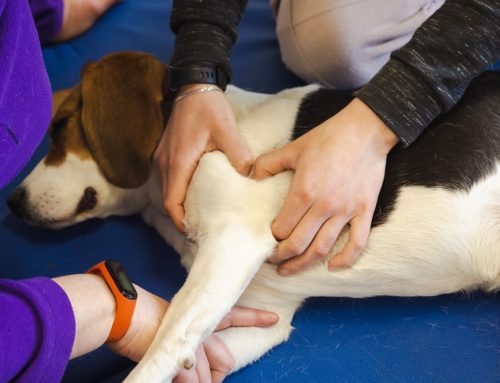
Anytime dogs are in a group environment, minor scuffles and exuberant play resulting in a few scrapes is expected from time to time. Run your hands over your dog after every pickup, paying particular attention to the face, ears, neck, shoulders, and lower legs. Minor scrapes can be cleaned and monitored. Eye irritation and any bite wound, even small punctures that look harmless, deserve a vet check because they can hide serious damage underneath.
Minor scrapes can be cleaned with mild soap and water, then watched for signs of infection (redness, swelling, discharge, increased pain). Eye irritation deserves prompt evaluation; conjunctivitis can be infectious or related to a corneal injury.
Bite wounds deserve special attention. The puncture from a tooth can introduce bacteria deep into tissue, with the surface wound looking deceptively small. Bite wounds frequently develop abscesses days later if not properly evaluated, so any bite wound is worth showing us.
How Do I Prepare My Dog for Their First Daycare Day?
The smoothest transitions happen gradually, with short trial sessions (a half-day, then a full day), calm matter-of-fact drop-offs rather than emotional goodbyes, and honest communication with staff about your dog’s medications, anxiety triggers, physical limitations, and behavioral tendencies. Hiding information to ensure acceptance puts your dog at risk. Our team is happy to chat with you about your dog’s particular preferences, quirks, and health risks to ensure the best first day possible.
What Questions Should I Ask When Touring a Daycare?
Confident, specific answers to the questions below tell you a lot about a facility’s standards. Vague or defensive responses tell you something different. Bring this list with you on your tour; the staff who run a quality facility expect these questions and welcome them.
- Grouping and supervision: How are dogs grouped? What’s your staff-to-dog ratio? What training do staff have?
- Vaccine and parasite requirements: What vaccines do you require? How is this verified at check-in?
- Rest and safety protocols: How often do dogs rest? How are introductions handled for new dogs?
- Cleaning protocols: How often are spaces cleaned? How are accidents handled?
- Injury and illness response: What happens if my dog is injured? What’s your protocol for sick dogs?
- Communication: How will you tell me how my dog is doing during their visit?
- Senior and special needs accommodation: Do you accept dogs with medication needs? What modifications can you make?

Frequently Asked Questions About Dog Daycare Safety
How do I know if my dog actually enjoys daycare?
Watch behavior at drop-off (engaged but not frantic), at pickup (tired but content), and during recovery the next day. A dog who pulls toward the door, settles in quickly, and recovers well is telling you they enjoy it. A dog who increasingly resists or struggles afterward is telling you otherwise.
What if my dog has had an issue at daycare in the past?
Talk with us about what happened. Some issues are facility-related (poor grouping, inadequate supervision) and resolve at a different facility. Others are dog-related (anxiety, tolerance issues) and may indicate that group daycare isn’t the right fit.
What vaccines does my dog absolutely need?
Rabies, DHPP, Bordetella, and canine influenza are typically required. Leptospirosis is required at many facilities and recommended for any dog with outdoor exposure, which includes most San Pedro dogs.
Can my dog get sick at daycare even if they’re fully vaccinated?
Yes. Vaccines reduce but don’t eliminate disease risk, and other contagious conditions including parasites, ringworm, and viral infections can still spread in group settings. Vaccination plus good facility hygiene plus your own monitoring keep risk low.
Setting Your San Pedro Dog Up for Safe Daycare Days
A strong daycare protects health, supervises play carefully, requires appropriate vaccines, and takes rest seriously. Our role is to update vaccines, evaluate temperament and physical readiness, prepare the documentation facilities require, and be available when something seems off after a visit. Our team is ready to help you think through what works best. Book an appointment online for a pre-daycare exam, vaccine updates, or a conversation about which option fits your dog best.



Leave A Comment