


Watching your dog hesitate at the bottom of the stairs or seeing your cat struggle to step into the litter box can be heartbreaking. You remember when they bounded through the house without a second thought, and now every movement seems like a decision they have to think through. If you have been wondering whether there is something you can do to help, the answer is yes. Mobility aids like harnesses, carts, and traction solutions can bridge the gap between struggling and moving with confidence, whether your pet is recovering from surgery, managing a chronic condition, or simply slowing down with age. These tools are not about giving up. They are about giving your pet the support they need to stay engaged, comfortable, and part of everyday life.
At South Shores Pet Clinic in San Pedro, we take a comprehensive approach to mobility challenges. That means starting with diagnostics to understand what is causing the problem, then building a plan that combines the right assistive devices with therapies like laser therapy and chiropractic care to address pain, improve function, and support your pet’s quality of life. If you are noticing changes in how your pet moves, request an appointment and let’s figure out the best path forward together.
How Do You Know When Your Pet Needs Mobility Support?
Mobility changes often develop gradually, which can make it hard to pinpoint when “slowing down” crosses into “needs help.” Reaching for assistive devices is not admitting defeat. It is recognizing that your pet deserves to move safely and comfortably, and that the right support can make that possible.
Common reasons pets need mobility assistance include arthritis, recovery after orthopedic or spinal surgery, neurological conditions affecting coordination and strength, life after amputation, and injuries that limit normal movement.
Signs to watch for:
- Hesitation before stairs, jumping onto furniture, or getting in the car
- A slower or shorter stride than usual
- Trouble rising after resting, especially after naps
- Slipping on smooth floors (tile, hardwood, laminate)
- Accidents near the litter box when stepping over the edge becomes difficult
- Less interest in walks or play because movement is uncomfortable
Early intervention makes a real difference. When we address mobility challenges before they become severe, pets adapt more easily to assistive devices and often maintain better strength and confidence. Our team uses diagnostics like radiographs and neurologic assessment to understand exactly what your pet’s body needs, so we can recommend the right combination of devices and therapies.
How Does Arthritis Affect Your Pet’s Mobility?
Osteoarthritis is the most common cause of chronic pain and mobility loss in older dogs and cats, though it can develop at any age following joint injuries, developmental conditions like hip dysplasia, or years of normal wear and tear. The cartilage that cushions joints gradually breaks down, leading to inflammation, stiffness, and pain that tends to worsen over time.
Treatment typically combines weight control, anti-inflammatory medications, joint supplements, and physical therapy. Staying active is actually important for arthritic pets because movement keeps joints lubricated and muscles strong, but the key is making that movement safe and comfortable.
How mobility aids help: Support harnesses help arthritic pets navigate stairs, rise from slippery floors, and get in and out of vehicles without straining painful joints. Traction aids are especially valuable because arthritic pets often lose confidence on smooth surfaces and begin avoiding rooms or routes they once walked easily. When a dog starts hesitating at the kitchen tile or a cat stops jumping to their favorite window perch, traction solutions and ramps can restore access to the spaces they love. Paired with pain management, chiropractic adjustments, and laser therapy, these tools help arthritic dogs and cats stay active and comfortable for years.
What Spinal Conditions Require Mobility Support?
Some of the most common reasons pets need harnesses or carts involve the spine. Understanding these conditions helps you recognize what your pet is experiencing and why support devices can be so helpful.
Intervertebral Disc Disease (IVDD)
Intervertebral disc disease happens when the cushioning discs between vertebrae rupture or bulge, putting pressure on the spinal cord. This causes pain, weakness, difficulty walking, or in severe cases, paralysis. While IVDD is especially common in long-backed breeds like Dachshunds, Beagles, and Corgis, any dog can be affected.
Symptoms range from mild back pain and reluctance to jump to dragging the rear legs or complete loss of movement. Treatment depends on severity and may include strict rest, anti-inflammatory medications, or surgery to relieve pressure on the spinal cord.
How mobility aids help: Support harnesses are often essential during IVDD recovery, helping pets stand and walk safely while their spinal cord heals. Some dogs regain full function with time and therapy, while others need long-term assistance using wheelchairs or carts. Either way, the right harness makes daily life manageable and keeps pets moving during the healing process.
Degenerative Myelopathy (DM)
Degenerative myelopathy is a progressive spinal cord disease most commonly seen in German Shepherds and related breeds, though it can affect other dogs too. It typically begins in middle-aged to senior dogs with subtle rear leg weakness and poor coordination, then gradually progresses over months to years.
There is no cure for DM, but supportive care can maintain quality of life for a long time. The focus is on keeping dogs comfortable, engaged, and moving as safely as possible throughout the disease course.
How mobility aids help: As DM progresses, mobility devices become essential. In the early stages, a rear support harness helps with stability on walks and getting up from rest. As weakness increases, a full-body harness or mobility cart can restore independence, allowing dogs to explore, play, and handle bathroom needs on their own terms.
Combined with physical therapy, controlled exercise, and our chiropractic care and laser therapy services, many dogs with DM and IVDD enjoy good quality of life well into the progression of their disease.
How Do Cancer and Amputation Affect Mobility?
Bone Cancer and the Decision to Amputate
Osteosarcoma is an aggressive bone cancer most common in large and giant breed dogs. It typically affects the limbs, causing progressive lameness, swelling, and significant pain. Treatment often involves amputation surgery to remove the tumor and provide immediate pain relief, frequently combined with chemotherapy to slow the spread of disease. Trauma and congenital defects may also result in a three-legged life.
The decision to amputate feels overwhelming for most pet owners, but here is something important to know: dogs adapt remarkably well to life on three legs. They do not spend time mourning the loss of a limb the way humans might. Once the painful leg is gone, most dogs are up and moving within days, and their quality of life often improves dramatically because the source of their pain has been removed.
Supporting Your Pet After Limb Loss
During the initial recovery period (typically several weeks), support harnesses help three-legged dogs navigate stairs, slippery floors, and outdoor terrain while they build confidence and strength in their remaining limbs. Front-leg amputees often benefit more from ongoing harness support than rear-leg amputees because the front legs carry more of a dog’s weight, but individual needs vary.
Some pets use harnesses only during the adjustment period, while others continue using them long-term for added stability on challenging surfaces or during longer walks. The goal is matching support to your pet’s abilities and comfort level as they adapt to their new normal.
What Types of Mobility Devices Are Available?
Different devices solve different problems. The right choice depends on where your pet needs support, their size and temperament, and your daily routine.
Support Harnesses: Stability for Walking and Rising
Support harnesses help you assist your pet without pulling on the neck or straining sore joints. They come in several styles:
- Rear support harnesses help dogs with hip, knee, or spinal weakness
- Front support harnesses assist pets with front leg issues or weakness
- Full-body harnesses provide support for pets with generalized weakness or balance problems
Handles on the harness let you help with stairs, car transfers, and bathroom trips without bending over or straining your own back. Proper fit is essential: the harness should be snug but not tight, with straps lying flat and padding at pressure points to prevent rubbing.
Getting started: Introduce the harness with short, positive sessions indoors. Let your pet wear it without using the handles at first, offer treats and praise, and keep early sessions brief. Most pets adapt quickly when the introduction is gradual and positive.
Mobility Carts: Independence for Pets With Significant Weakness
When the back legs cannot provide enough push, or nerve function is significantly limited, mobility carts can restore remarkable independence. Modern carts are lightweight, adjustable, and work on various terrains.
Carts support weak or paralyzed limbs so pets can move using their stronger legs, allowing many to explore, play, and handle bathroom needs on their own. Most pets adapt to carts quickly with proper fitting and positive introduction.
Getting started: Begin in a familiar, open space. Make the first steps rewarding with treats and praise. Check regularly for rubbing points, and pair cart time with gentle strength-building activities for best results. We can help you measure, fit, and introduce a cart during a mobility consultation.
Traction Aids: Confidence on Slippery Floors
Slipping on smooth floors rattles confidence and can worsen joint strain over time. When claws cannot grip polished surfaces, traction aids provide the extra grip pets need.
- Nail grips fit over the nails to improve contact with the floor, offering discreet traction for pets who dislike wearing anything on their feet
- Booties and socks provide full-foot coverage and can protect sensitive paws
- Paw waxes add grip but need frequent reapplication
Introduce traction aids gradually. Keep sessions short while your pet learns the new sensation, and make sure nails are trimmed so grips seat properly. Many families use traction aids as a first step while waiting for a harness or cart fitting.
What Home Modifications Help Pets With Mobility Challenges?
Small changes at home can make a big difference in how safely and confidently your pet moves. These modifications amplify the benefits of assistive devices and reduce the risk of falls and injuries.
For dogs: Creating an arthritis-friendly home means adding rugs or runners with non-slip backing on common routes, placing ramps at favorite couches, beds, and porches to eliminate jumping, using non-slip mats near food and water bowls, providing orthopedic bedding at ground level, and using gates to block stairs when needed.
For cats: A guide to home modifications for cats can help you rethink vertical spaces and litter box access. Consider low-entry litter boxes, shallow step stools to favorite perches, and wide, stable platforms that make climbing feel safe.
If you would like personalized guidance for your home setup, our team can review your pet’s daily routine and offer tailored recommendations during a wellness visit or mobility consultation.
How Do Chiropractic Care and Laser Therapy Support Mobility?
Assistive devices work best when they are part of a complete care plan that also addresses pain, inflammation, and nerve function. At South Shores Pet Clinic, we offer two therapies that complement mobility aids beautifully.
Chiropractic Care
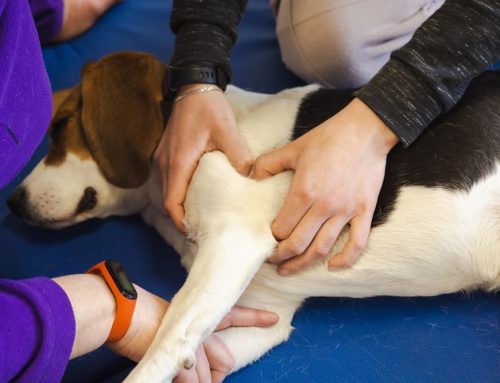
Our chiropractic care services restore nerve flow to reduce pain, increase mobility, and support normal function in dogs. The chiropractor, certified through the Animal Chiropractic Education Source, assesses the condition of the spine and uses chiropractic adjustments to restore proper nerve communication.
Chiropractic care is especially helpful for pets with spinal conditions like IVDD or degenerative myelopathy, arthritis affecting the spine, and general stiffness or discomfort that limits movement. We also provide stretching exercises when appropriate to maintain progress between visits.
Chiropractic care pairs well with mobility devices because it addresses the underlying nerve function that affects how well pets can use their limbs, while harnesses and carts provide the physical support to keep them moving safely.
K-Laser Therapy
Our laser therapy service uses K-Laser technology to accelerate healing, reduce inflammation, and relieve pain. Laser therapy is effective for chronic conditions like arthritis, acute injuries, post-surgical recovery, and general rehabilitation from trauma.
For pets using mobility aids, laser therapy can reduce the pain and inflammation that make movement difficult, helping them get more benefit from their harness or cart. Many owners notice their pets moving more freely and confidently after a series of laser sessions.
Integrating Everything Into a Complete Plan
Comprehensive mobility management combines pain control, assistive devices, and home modifications into a plan that adapts as your pet’s needs change. Veterinary physical rehabilitation builds strength and coordination that make devices easier to use. Therapies like chiropractic care, acupuncture, and laser therapy can ease soreness and support healing. Weight management protects joints and helps devices work more effectively.
We start with a clear assessment, then layer in what helps most for your pet. That might be a harness for stairs, traction for the kitchen, chiropractic adjustments to improve nerve function, and laser therapy to manage pain. We adjust the plan as your pet grows stronger or as needs change, always keeping comfort and quality of life at the center.
How Do You Choose the Right Device for Your Pet?
Selecting the right mobility tool depends on your pet’s specific situation. Here are the key factors to consider:
- Where does your pet need help? Rear-leg weakness, front-leg issues, and generalized weakness each require different solutions
- What is your pet’s size and weight? This affects which devices fit properly and provide adequate support
- What is your pet’s temperament? Anxious pets need slower introductions; food-motivated pets often adapt faster
- What does your home look like? Stairs, flooring type, outdoor access, and available space all influence which devices work best
When you are unsure where to start, a professional assessment helps. We can evaluate your pet’s specific limitations, measure for proper fit, and guide you through introduction. You can book an appointment online to get started.

Frequently Asked Questions
How do I know when it is time to try mobility aids?
If you are noticing hesitation with stairs, slipping on floors, difficulty rising, or reduced interest in walks and play, it is worth exploring whether support devices could help. You do not need to wait until your pet cannot move at all.
Are carts only for paralyzed pets?
No. Carts help pets with severe weakness, not just complete paralysis. They are also valuable for pets who have lost a limb, especially when combined with rehabilitation to build strength in the remaining legs.
Do cats use harnesses and traction aids?
Yes. Many cats benefit from well-fitted harnesses, nail grips, or strategic rug placement. Cats tend to need slower introductions and shorter sessions, but they can adapt to mobility aids just like dogs.
Can mobility aids replace medical treatment?
No. Devices work best alongside pain control, rehabilitation, and weight management. A harness does not fix the underlying problem, but it does make daily life safer and more comfortable while medical management addresses the root cause.
Where should I start?
Begin with a veterinary assessment to understand what is causing your pet’s mobility challenges. From there, we can recommend specific devices and help you introduce them gradually.
Your Partner in Keeping Your Pet Moving
Mobility challenges do not have to mean the end of your pet’s active life. With the right devices, thoughtful home modifications, and supportive therapies like chiropractic care and laser treatment, pets can stay comfortable, confident, and engaged in the routines that bring them joy.
At South Shores Pet Clinic, we bring experience and compassion to every mobility assessment. If you are ready to help your pet move through the world with greater comfort and confidence, contact us to discuss your pet’s mobility needs or request an appointment to start building a personalized plan. Our team in San Pedro is here to help.

Leave A Comment